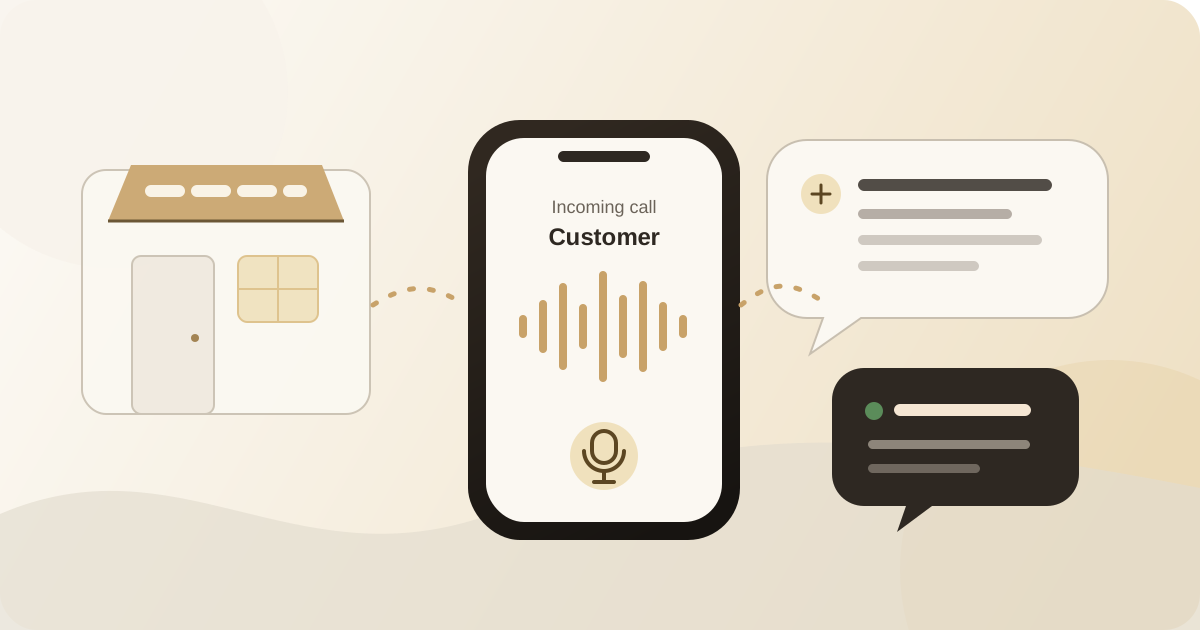
A phone call is often the moment a potential customer is most ready to act. They may want to book an appointment, check availability, ask about a service, or solve an urgent problem. For a small business, however, answering every call can be difficult. The same person serving a customer, managing a team, or travelling between jobs may also be expected to answer the phone.
A voice agent can take care of the first part of that conversation. It can answer promptly, understand why someone is calling, complete routine tasks, and involve a person when the situation needs one. Used well, it gives a small team more coverage without making the customer experience feel impersonal.
What is a voice agent?
A voice agent is software that can speak with callers using natural language. Unlike a traditional phone menu that asks callers to “press one” or follow a fixed sequence, a voice agent can listen to a request and respond conversationally.
Depending on how it is configured and connected to your business systems, it can:
- answer common questions;
- explain services, opening hours, and availability;
- book, reschedule, or cancel appointments;
- collect the details needed for a quote or follow-up;
- route urgent or complex calls to the right person;
- send a confirmation or follow-up message; and
- record the outcome so your team knows what happened.
The quality of the experience depends on more than the voice itself. A good implementation also needs accurate business information, clear rules, reliable integrations, and a straightforward route to a human.
Benefits for small businesses
1. Answer customers when your team cannot
Small businesses miss calls for ordinary reasons: everyone is already helping a customer, the office is closed, or the owner is away from the phone. A voice agent can provide consistent coverage during busy periods, after hours, or whenever the team is unavailable.
That does not mean every business must offer every service around the clock. The agent can simply explain when the business is open, capture the request, book an available time, or arrange a callback. The customer receives a useful response instead of reaching a ringing phone or an uninformative voicemail.
2. Turn more enquiries into clear next steps
A missed call is not automatically a lost customer, but it creates friction. Callers may try another provider if they cannot quickly understand availability or what to do next.
A voice agent can move a straightforward enquiry forward while the caller is still engaged. For example, it can offer an appointment, collect project details, confirm a service area, or send a link. Even when a person needs to continue the conversation, the team can receive the caller’s name, need, and preferred time rather than starting from zero.
3. Give every caller a consistent first response
Busy teams naturally answer the same question in different ways. Important details can be forgotten when the phone rings at the wrong moment. A voice agent works from an approved source of business information and follows the same rules for every call.
This consistency is valuable for questions about:
- business hours and locations;
- services and basic pricing guidance;
- documents a customer should bring;
- appointment policies;
- service areas; and
- what happens after the call.
The information still needs an owner. When hours, policies, or services change, the agent’s knowledge should be updated and tested.
4. Reduce repetitive administrative work
Many calls are important but predictable. Booking an appointment, confirming an address, or collecting contact details does not always require a team member to stop what they are doing.
When a voice agent is connected to the right calendar or customer system, it can complete these tasks during the conversation. This can reduce back-and-forth calls and give the team a cleaner record of each enquiry.
Automation should stay within clear boundaries. If a request falls outside those boundaries, the safest response is to explain the limitation and escalate rather than guess.
5. Support customers in the language they prefer
In multilingual markets, callers often switch naturally between languages. Asking someone to navigate a rigid language menu can make a simple conversation harder.
A multilingual voice agent can make the first interaction more comfortable by responding in the language the caller begins using and following reasonable changes during the conversation. This can help a business serve a broader local audience without expecting every team member to be available in every supported language.
Language support should be tested with real vocabulary from the business. Names, neighbourhoods, medical terms, product names, and mixed-language phrases can all affect accuracy.
6. Qualify and route calls more intelligently
Not every call needs the same destination. Some can be resolved immediately, some should become scheduled follow-ups, and others need urgent human attention.
A voice agent can ask a small number of relevant questions and route the conversation according to agreed rules. A home-services company might separate emergency requests from future estimates. A clinic might distinguish appointment questions from situations that require staff attention. A property business might capture location, budget, and preferred viewing time before assigning a lead.
The questions should remain proportionate. A caller should not have to complete a long interview before reaching a person when the request is urgent or sensitive.
7. Make call patterns easier to understand
When call outcomes are recorded consistently, the phone becomes a useful source of operational insight. A business can see the questions customers ask repeatedly, the times when demand is highest, and the reasons calls need human escalation.
Those patterns can improve more than phone handling. They may reveal missing website information, confusing policies, staffing gaps, or services customers are actively requesting.
Any recording, transcription, and retention process should follow the business’s privacy obligations. Callers should receive appropriate notice, and access to call data should be limited to people who need it.
8. Handle busy periods without changing the customer experience
Call demand is rarely even. A promotion, seasonal rush, weather event, or temporary staffing gap can create more calls than a small team can answer.
A voice agent can absorb routine conversations during these peaks while applying the same approved rules. The business should still define capacity limits—for example, what to say when no appointments remain—and monitor whether the agent is creating more follow-up work than the team can handle.
Keeping the human touch
Voice agents are most effective when customers can reach a person at the right moment. Complaints, emergencies, sensitive situations, unusual requests, and high-value decisions may all need human judgement.
A customer-friendly design should make escalation part of the normal experience, not treat it as a failure. The agent can explain that it is connecting the caller, share what has already been discussed, and set a clear expectation if nobody is immediately available.
Businesses should also review conversations regularly. Early calls will reveal phrases the agent misunderstands, questions missing from its knowledge, and situations where routing rules need adjustment.
What to look for in a voice agent
The right solution should fit the way the business already works. Before choosing one, ask:
- Can it complete the tasks that matter? A pleasant voice is not enough if it cannot reliably book, route, or capture the required information.
- Can the business control its answers? Your team should be able to review and update the source information.
- Does it integrate with existing tools? Calendar, CRM, messaging, and phone integrations should reduce duplicate work rather than create it.
- How does human escalation work? Test transfers, callbacks, urgent cases, and what happens when nobody answers.
- Which languages are supported well? Test actual caller phrases and local vocabulary, not only a generic demonstration.
- How are recordings and customer details protected? Understand access, storage, retention, deletion, and consent options.
- Can you review outcomes? Your team should be able to see what the caller wanted and what action was taken.
- What happens when the service is unavailable? A fallback plan is essential for a business phone line.
Avoid evaluating the product only through a scripted demo. A useful test uses real business questions, interruptions, background noise, different accents, and requests the agent should refuse or escalate.
How to get started without disrupting the business
A gradual rollout makes it easier to learn safely.
- Choose one clear use case. Start with after-hours calls, appointment requests, or frequently asked questions instead of trying to automate every conversation.
- Prepare accurate information. Review hours, services, locations, policies, escalation contacts, and any wording the agent must avoid.
- Define boundaries. Decide what the agent can complete, what it can only explain, and what must go to a person.
- Connect only the tools it needs. Add calendar or messaging access for the chosen use case and apply the minimum necessary permissions.
- Test realistic calls. Include easy requests, unclear questions, language switching, corrections, urgent situations, and requests outside the agent’s scope.
- Launch with a fallback. Begin with a limited schedule or call type, and make sure callers can still reach the team.
- Review and improve. Check outcomes frequently, correct inaccurate information, and expand only when the first workflow is reliable.
A better phone experience for customers and teams
For a small business, the most valuable benefit of a voice agent is not automation by itself. It is the ability to give callers a prompt, helpful next step while protecting the team’s time and attention.
The best systems are clear about their role. They answer routine questions, complete well-defined tasks, and bring in a person when judgement matters. With accurate information, sensible integrations, and regular review, a voice agent can make the business easier to reach without taking away the human relationships that make a small business valuable.